 |
| Lugar de origem: | China |
| Marca: | Golden Grain |
| Certificação: | ISO, HALAL, KOSHER, HACCP |
| Número do modelo: | GMAL-99 |
| Quantidade de ordem mínima: | 1300 kg |
|---|---|
| Preço: | USD500/MT FOB QINGDAO - USD700/MT FOB QINGDAO |
| Detalhes da embalagem: | 250 kg/tambor, 270 kg/tambor, 275 kg/tambor com novo tambor de plástico, 1300 kg de tambor IBC, saco |
| Tempo de entrega: | 7 - 10 dias úteis |
| Termos de pagamento: | L/C, T/T, D/P, Western Union |
| Habilidade da fonte: | 40000 MT por mês |
| Higroscopicidade: | Moderado | Aparência: | Líquido viscoso límpido a ligeiramente amarelo |
|---|---|---|---|
| Prazo de validade: | 12-24 meses quando armazenado corretamente | Solubilidade: | Muito solúvel em água |
| Índice glicêmico: | Baixo (cerca de 35) | Tipo: | Xarope de álcool de açúcar |
| Valor calórico: | 2,1kcal/g | Doçura: | Aproximadamente 75-90% de sacarose |
| Status regulatório: | Geralmente reconhecido como seguro (GRAS) em muitos países | Nome do produto: | xarope de maltitol |
| Perfil de sabor: | Doce com efeito refrescante, menos sabor | Estabilidade: | Estável em condições normais de armazenagem |
| Fonte: | maltose hidrogenada | Uso: | Substituto do açúcar em confeitaria, panificação e produtos farmacêuticos |
Sirope com alto teor de maltitole de grau alimentício 75% Alcool de açúcar adoçante líquido para doces duros, doces moles e chiclete E965
| Atributo | Valor |
| Nome do produto | Xarope de alto teor de maltitole (xarope de maltose hidrogenada) |
| Número CAS. | 585-88-6 |
| Número E / INS | E965 / 965 |
| Código do SH | 3824.9099 |
| Fórmula molecular | C12H24O11 |
| Peso Molecular | 344.31 |
| Grau | Grau alimentício (GB 28307 / FCC V / USP 35) |
| Aparência | Líquido viscoso, transparente, incolor e xaropado |
| Sabor | Doce e limpo, sem sabor, arrefecimento insignificante |
| Doçura. | ~ 90% de sacarose |
| Valor calórico | 2.1 kcal/g |
| Parâmetro | Especificações |
| Aparência | Líquido viscoso transparente, incolor a amarelo pálido |
| Sólidos secos (Brix) | 75% |
| Teor de maltitol (em base seca) | ≥ 50% |
| Teor de sorbitol (em seco) | ≤ 6% |
| Reduzir o açúcar (em base seca) | ≤ 0,3% |
| pH (50% de solução) | 4.0-6.0 |
| Cloreto de sódio | ≤ 50 ppm |
| Cinzas sulfatadas | ≤ 01 |
| Metais pesados (em Pb) | ≤ 5 ppm |
| Arsénio (As) | ≤ 0,5 mg/kg |
| Níquel (Ni) | ≤ 2 ppm |
| Chumbo (Pb) | ≤ 0,5 ppm |
| Contagem total de placas | ≤ 10000 CFU/g |
| Levedura e Mofo | ≤ 100 CFU/g |
| E. coli | Negativo |
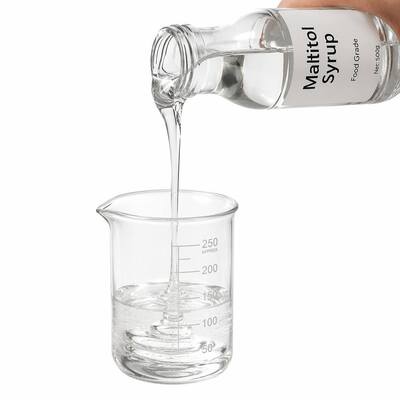
O xarope com alto teor de maltitol (E965) é um hidrolizado hidrogenado de amido ∙ um líquido transparente, incolor e viscoso que contém ≥ 50% em peso de maltitol, obtido por hidrogenação de maltose a partir de amido de milho não OGM.Com ~ 90% de doçura de sacarose e apenas 2,1 kcal/g, é o álcool de açúcar mais próximo do açúcar em sabor.
Para os fabricantes de confeitaria, isto significa uma vantagem crítica:Podes usá-lo sozinho.O sabor é limpo, redondo e indistinguível do açúcar.
| Desafio com açúcar | Solução de xarope de maltitol |
| Alto teor calórico / impacto glicêmico | 2.1 kcal/g; baixo IG; adequado para diabéticos |
| Risco de cárie dentária | Não cariogénico; amigável para os dentes |
| Cristalização em armazenamento | Anti-cristalização; maior estabilidade na prateleira |
| Precisa de misturar com adoçantes intensos | ~ 90% doçura de sacarose; utilizável isoladamente |
| Efeito de arrefecimento indesejado (comum em polióis) | Frigorífico insignificante ️ idêntico à sacarose |
| Camarão-do-mar | Nenhum bronzeamento; cor estável durante o cozimento |

O xarope de maltitol é o padrão da indústria para doces duros sem açúcar.O seu elevado teor de sólidos (75%+) e a sua estabilidade térmica permitem cozinhá-lo a temperaturas de fissuração dura (145°C) sem degradaçãoO doce resultante é:
Cristalino
Não pegajoso
Neutro em sabor
Doces de um único ingrediente
Grau recomendado: substância seca ≥ 80%, ensaio de maltitol ≥ 55% para obtenção de dureza e doçura ideais.
O xarope de maltitol fornece viscosidade e corpo ideais para doces moles sem açúcar, caramelos, biscoitos e mastigados de frutas. Suas propriedades humectantes mantêm a suavidade e evitam a seca durante a vida útil.Benefícios principais:
Plasticidade
Retenção de umidade
Boca limpa
Grau recomendado: substância seca ≥ 75%, ensaio de maltitol ≥ 50% para equilibrar a doçura e a textura.
Como adoçante não cariogênico, o xarope de maltitol é perfeito para centrais e revestimentos de goma de mascar sem açúcar.
Liberação de doçura mais prolongada
Melhor textura
Sem choque de arrefecimento
Amigável ao revestimento
Grau recomendado: substância seca ≥ 85%, ensaio de maltitol ≥ 75% para obtenção de doçura máxima com sorbitol mínimo.
Para os fabricantes de confeitaria com linhas de produtos de chocolate, o xarope de maltitol fornece volume, doçura e sensação suave na boca em barras de chocolate sem açúcar, batatas fritas e revestimentos compostos.A sua propriedade anti-cristalização garante um brilho, acabamento sem florescimento.
| Tipo de doces | Temperatura de cozimento | Substância seca | Grau de maltitol | Dica chave |
| Doces Duros | 145°C a 155°C | ≥ 80% | ≥ 55% | Adicionar cor/ sabor a menos de 130°C para evitar queimaduras |
| Doces moles | 120°C a 130°C | ≥ 75% | ≥ 50% | Controle a umidade para 6 ∼ 8% para mastigação ideal |
| Centro de Chiclete | N/A | ≥ 75% | ≥ 50% | Sirop pré-aquecido a 40°C para facilitar a mistura |
| Revestimento por goma | 40°60°C | ≥ 85% | ≥ 75% | Aplicar em camadas finas; 30 a 40 camadas para a casca completa |
| Chocolate | 45°C a 50°C | ≥ 75% | ≥ 50% | Concha a 50°55°C durante 12°18 horas |
Fabricado em instalações certificadas ISO 22000/HACCP.
Produtos químicos
Físico
Metais pesados
Micro
Documentos disponíveis: COA, folha de especificações, MSDS/SDS, declaração de não transgênico, certificado Halal/Kosher, dados de estabilidade, declaração sobre alérgenos.
| Opção | Embalagem | Peso líquido |
| Bateria | Um novo tambor de plástico | 275 ‰ 280 kg |
| IBC | Container intermédio de granéis | 1,300-1400 kg |
| Flexitank | Contêiner ISO | ~ 24 MT |
| Tanque ISO | Tanque de líquido dedicado | ~ 24 MT |
P: Posso usar este xarope sozinho ou preciso misturá-lo com adoçantes intensos?R: Com ~ 90% de doçura de sacarose, o xarope de maltitol pode ser utilizado sozinho para a maioria dos doces duros e doces moles sem adição de sucralose, acesulfame-K,ou da stevia, reduzindo os custos e simplificando a sua receita.
P: Qual a melhor qualidade para doces duros?R: Recomendamos uma substância seca ≥ 80% e um ensaio de maltitol ≥ 55% para uma dureza, clareza e estabilidade de prateleira ideais.
P: O xarope de maltitol causa bronzeamento durante o cozimento de doces?R: Não. O maltitol não participa nas reações de Maillard, mantendo uma aparência cristalina mesmo a altas temperaturas de cozimento.
P: Os doces ficarão pegajosos durante o armazenamento?R: O maltitol tem uma menor higroscopicidade do que o sorbitol, o que significa menos absorção de umidade e redução da viscosidade da superfície durante a vida útil.
P: Como se compara ao sorbitol para doces?R: O maltitol fornece ~ 90% de doçura de sacarose versus ~ 60% para o sorbitol, com efeito de resfriamento insignificante versus o resfriamento perceptível do sorbitol.Isso faz do maltitol a escolha preferida para doces onde a paridade de sabor com o açúcar é crítica..
Q: Que certificações fornece?R: Não OGM, Halal, Kosher, ISO 22000, HACCP.
P: Posso obter uma amostra para testar a fórmula?R: Sim. amostras gratuitas (1 ¢ 2 kg) para avaliação de laboratório. Comprador cobre o correio; ou carga recolhida via DHL/FedEx.
Pronto para formular?Entre em contato conosco para um orçamento competitivo, amostra gratuita ou consulta técnica.